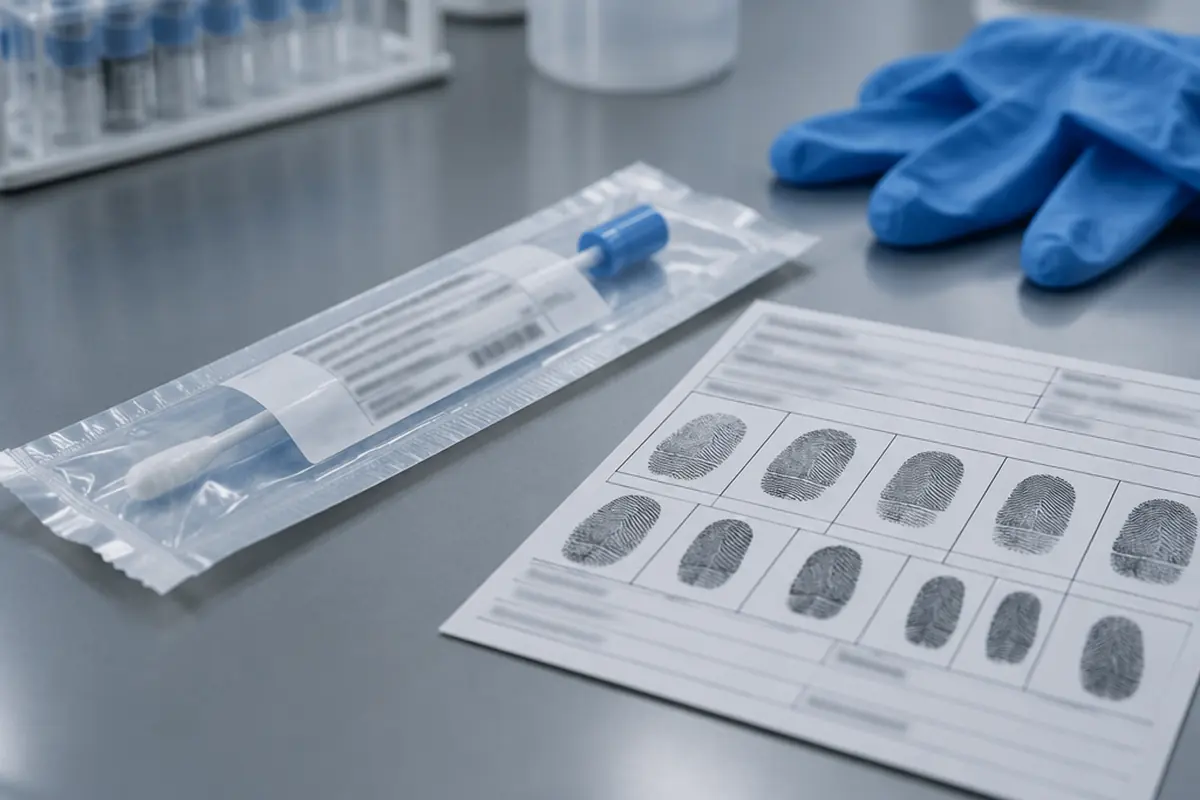
If you are arrested in Scotland, the police can take your fingerprints, photograph and a DNA sample, usually a mouth swab, without your consent. If you are then not prosecuted, or you are found not guilty, the general rule is that this information must be destroyed.
There are important exceptions. Scotland's rules are set out mainly in the Criminal Procedure (Scotland) Act 1995 and depend on how your case ended and what kind of offence was involved.
Key points
- The police can take fingerprints and DNA from anyone arrested, using reasonable force if necessary.
- If you are convicted, the data is kept indefinitely with your criminal record.
- If you are not prosecuted, it is normally destroyed.
- For some violent and sexual offences, it can be kept for up to 3 years even without a conviction, and the police can apply to extend that.
- If you accept an alternative to prosecution, such as a fiscal fine, it can be kept for 2 years, or 3 years for violent or sexual offences.
When can the police take my DNA and fingerprints?
When you are arrested, the police have the power to take your photograph, fingerprints and samples such as a mouth swab or hair root. They do not need your permission. Intimate samples, such as blood, generally need a warrant, except in drink and drug driving cases.
If you are not under arrest, the police can ask for a voluntary sample, for example to eliminate you from an enquiry. You can refuse, and if you give one voluntarily you can usually withdraw your consent later. Our guide on what happens after an arrest in Glasgow explains the wider custody process.
How long can they keep it?
| How your case ended | Fingerprints and DNA profile |
|---|---|
| Convicted | Kept indefinitely |
| Accepted an alternative to prosecution, such as a fiscal fine | Kept for 2 years, or 3 years for violent or sexual offences |
| Not prosecuted, or found not guilty, for a relevant violent or sexual offence | Can be kept for up to 3 years, with possible court extensions of 2 years at a time |
| Not prosecuted, or found not guilty, for other offences | Normally destroyed |
The police can apply to the sheriff to keep DNA information for further periods of 2 years, and can apply more than once. You are entitled to oppose such an application.
Children aged 12 or over who admit, or are found to have committed, a serious offence at a children's hearing are treated in a similar way to adults who are convicted.
What if I was never charged?
If you were arrested and released without any report to the procurator fiscal, or the fiscal decided to take no action, the data should normally be destroyed, unless the offence falls into the violent or sexual category. See what no further action means in Scotland.
That covers the fingerprints and DNA profile. Police records of the arrest and investigation itself can be kept separately under data protection rules.
How can I check, or ask for deletion?
- Make a subject access request You can ask Police Scotland what personal information it holds about you, including biometric data.
- Ask for deletion If your data should have been destroyed under the rules, you can ask Police Scotland to delete it.
- Take advice if it is refused A solicitor can check whether retention is lawful and challenge it where appropriate.
The Scottish Biometrics Commissioner oversees how Police Scotland and other bodies use biometric data, under a statutory code of practice.
Good to know: Biometric data is held centrally and can be searched against crime scene samples while it is retained. That is why the retention rules are worth checking if you were arrested but not prosecuted.
Does this affect my interview?
Fingerprints and DNA can be taken whether or not you answer questions, and refusing to cooperate with a lawful sample can lead to force being used. What you say in a police interview is a separate matter, and you have the right to a solicitor before and during it. In cases involving allegations of sexual offences or serious assault, forensic evidence is often central, so early advice is important.
Arrested and worried about what the police hold? Speak to our criminal defence team. Your first hour is free.
Book a free consultationFrequently asked questions
Can I refuse to give the police my DNA?
Not if you have been arrested. The police can take fingerprints and a mouth swab without consent and use reasonable force. If you are not under arrest, you can refuse a voluntary sample.
Are my photographs deleted too?
Custody photographs are covered by separate retention policies. You can ask Police Scotland about them in a subject access request.
What counts as a violent or sexual offence for retention?
The law lists relevant offences, including serious assault and sexual offences. A solicitor can confirm whether the offence you were arrested for is covered.
Does a recorded police warning mean my DNA is kept?
Recorded police warnings are usually given without an arrest, in which case no samples are taken. If you were arrested, ask Police Scotland what is held.