
Our criminal defence lawyers advise people across Aberdeen, from Bridge of Don and Dyce to Torry and Cove Bay, on police interviews, charges and court cases. Because we are based in Glasgow, we work with Aberdeen clients by phone, video, email and post, and we can arrange calls around offshore rotas and shift work.
We act for people facing criminal charges of every kind, from breach of the peace and road traffic offences to the most serious crimes. Our criminal defence solicitors explain where you stand in plain English, test the evidence against you and build a defence aimed at the best possible outcome.
Key points
- If you are arrested, you have the right to speak to a lawyer before and during any questioning.
- Apart from your name, address, date and place of birth and nationality, you do not have to answer police questions.
- The police can normally hold you for up to 12 hours without charge, extended to 24 hours only with a senior officer's approval.
- The procurator fiscal, not the police, decides whether you are prosecuted and in which court.
- Since 1 January 2026, juries in new trials can only return guilty or not guilty: the not proven verdict has been abolished.
In police custody now? Ask for a lawyer straight away. Advice while you are in police custody is free, and the police must arrange it, either from your own solicitor or a duty solicitor. Our enquiry form is not monitored around the clock, so do not wait to hear from us before asking for advice at the station. Contact us as soon as you are released, or ask a family member to get in touch for you.
Criminal defence solicitors in Aberdeen and Aberdeenshire
We advise clients from Old Aberdeen, Torry, Dyce, Bridge of Don, Cults, Bieldside, Cove Bay and Hazlehead, and nearby Aberdeenshire towns such as Westhill and Inverurie.
Map of Aberdeen and the surrounding areaThe map loads from Google Maps when you choose to show it.
Which court will deal with a case from Aberdeen?
Criminal cases in Aberdeen are dealt with at Aberdeen Sheriff Court and Justice of the Peace Court, Castle Street, Aberdeen AB10 1WP, which is part of the Sheriffdom of Grampian, Highland and Islands. Aberdeen has three court buildings. Criminal business is dealt with at the sheriff court on Castle Street, while High Court cases and all jury trials take place in the Sheriff Court Annex and High Court of Justiciary building at 53 Castle Street (Mercatgate). Civil cases go to the Civil Justice Centre on Queen Street. High Court cases and sheriff and jury trials are heard in the Mercatgate building at 53 Castle Street.
The procurator fiscal decides which court hears a case, and your citation, undertaking or charge sheet will give the court and the date. If you are not sure where you need to be, contact us and we will check for you.
Police in Aberdeen
Aberdeen is covered by Police Scotland's North East division. If you are arrested, you may be taken to a custody centre outside Aberdeen, depending on where cells are available. Wherever you are held, your rights are the same: ask for a solicitor before you answer any questions.
How we work with clients in Aberdeen
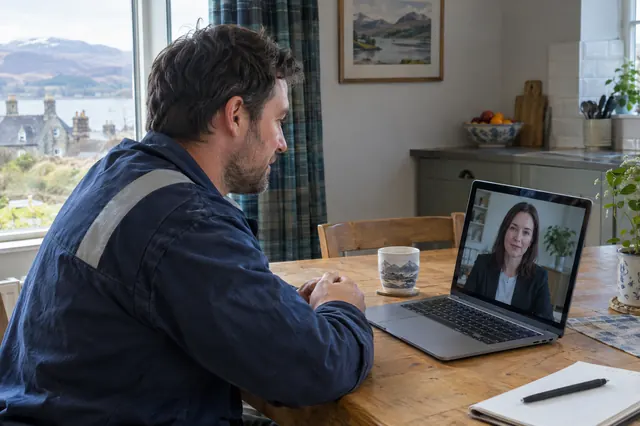
We do not have an office in Aberdeen. Our only office is at 3 Kent Street, Glasgow. Advice before a police interview, reviewing the evidence, taking your instructions and preparing your defence can all be done by phone, video, email and post, and you are welcome to meet us in Glasgow. When your case needs a solicitor in court, we will confirm at the outset whether we can attend Aberdeen Sheriff Court in person and what any travel will cost, and we put that in writing before any work starts.
Criminal defence services for people in Aberdeen
We advise on every stage of a criminal case and the full range of offences prosecuted at Aberdeen Sheriff Court and in courts across Scotland. Each page below explains the law and how we can help.
Police, arrest and bail
Court representation and appeals
Violent and serious crime
Domestic and sexual offences
Public order, theft and property
Drugs, fraud and financial crime
Your rights if you are arrested in Scotland
The police can arrest you if they have reasonable grounds to suspect you of a crime. They must tell you that you are under arrest, what crime they suspect and why the arrest is necessary. Apart from your name, address, date and place of birth and nationality, you do not have to answer their questions. You also have the right to have someone told where you are, and the right to legal advice:
- you can speak to a lawyer in private at any time while in custody, by phone or in person;
- you can have a lawyer with you while you are questioned, and once you ask for one the police must wait, except in exceptional circumstances;
- if you turn down legal advice, you can change your mind later; and
- if you are under 18, or a vulnerable adult, you should not normally be questioned without a lawyer present.
If you are released while the police continue to investigate, you may be placed on investigative liberation, with conditions that can last up to 28 days. Breaking those conditions is a criminal offence, so take advice before you agree to anything. Our page on advice before police questioning explains more.
What happens after you are charged?
If the police charge you with a criminal offence, they will either release you on an undertaking to appear at court on a set date, release you while the procurator fiscal considers the case, or keep you in custody to appear at court on the next working day. For people in Aberdeen, that court is usually Aberdeen Sheriff Court. For less serious matters, the police or the fiscal can offer a direct measure, such as a warning or a fiscal fine, instead of a prosecution.
The procurator fiscal decides whether there is enough evidence to prosecute, whether a prosecution is in the public interest, and which court should hear the case. Early legal representation matters: we can write to the fiscal for you, point out weaknesses in the evidence and, in the right case, argue that the matter should not go to court at all.
Criminal courts in Scotland
Where your case is heard depends on how serious the charge is:
| Court | Cases | Maximum sentence |
|---|---|---|
| Justice of the Peace court | Less serious offences, such as some traffic offences and being drunk and disorderly. No jury. | 60 days in prison or a £2,500 fine. |
| Sheriff court, summary | Cases heard by a sheriff alone, such as theft, assault and possession of drugs. | 12 months in prison or a £10,000 fine. |
| Sheriff court, solemn | More serious cases heard by a sheriff and a jury. | 5 years in prison or an unlimited fine. |
| High Court of Justiciary | The most serious cases, including all murder and rape cases, and all criminal appeals. | No limit. |
Jury trials have 15 jurors. Since 1 January 2026, the not proven verdict has been abolished for new trials, and a conviction needs at least two thirds of the jury to agree. In the High Court, only an advocate or solicitor advocate can present your case, so we instruct experienced counsel and work alongside them throughout.
How our criminal defence solicitors build your defence
- Early advice We advise you before questioning or your first court appearance, so you do not say or agree to anything that harms your case.
- Reviewing the evidence We examine the Crown's evidence, including statements, CCTV, phone records and forensic reports.
- Investigating your side We take statements from witnesses, known as precognitions, and gather the evidence that supports your account.
- Advice on your plea We give you an honest view of the strengths and weaknesses of the case, so you can decide how to plead.
- Trial or mitigation We present your defence at trial, or, if you plead guilty or are convicted, put forward everything that could reduce your sentence.
- Appeals If something went wrong, we advise on criminal appeals against conviction or sentence.
Criminal defence fees
We act in criminal cases on a privately funded basis. Before any work starts, we explain how our fees are worked out, give you an estimate for each stage and confirm everything in writing, including any travel to court, so there are no surprises. The cost depends mainly on the charge, the court and whether the case goes to trial.
We do not provide criminal legal aid, which is managed by the Scottish Legal Aid Board and only available through solicitors registered to provide it. Advice in police custody is free whoever provides it. Read more in criminal legal aid explained.
Need a criminal lawyer in Aberdeen? Get confidential advice from our criminal defence team. The first hour is free.
Book a free consultationWhy choose us as your criminal defence lawyers in Aberdeen?
- Experience: our directors have 76 years of combined experience in legal services.
- Straight answers: we tell you honestly where you stand, even when it is not what you want to hear.
- Every stage: from the police station and bail to trial, sentencing and criminal appeals.
- Clear fees: private, agreed in writing before work starts.
- Complete confidentiality: everything you tell us is protected by legal privilege.
Criminal lawyers near Aberdeen
We also have pages for clients in nearby areas: